Every cursive letter, written out stroke by stroke
Watch the pen move, follow the numbered steps, then print a free practice sheet.
Now writing capital A
The alphabet
See the full chartEach letter page shows the capital and lowercase letter together, plus any common second form.
Numbers
All ten numbersHow it works
Three simple stepsCursive is easier to learn when you can see the pen move. This site shows every capital letter, lowercase letter and number written stroke by stroke, with numbered steps that say where the pen starts, which way it goes and where it stops.
Watch the letter
Press play on any letter page. The pen draws the letter at writing speed, and each numbered step lights up as the pen reaches it. Tap a step to see just that stroke, or slow it down.
Read the steps
Each step is written in plain words: where to start, which way to curve, where to stop. The steps follow the way cursive is taught in US schools.
Print and practice
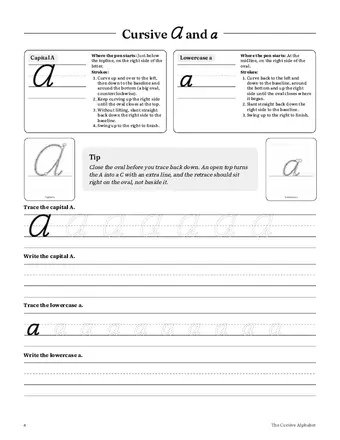
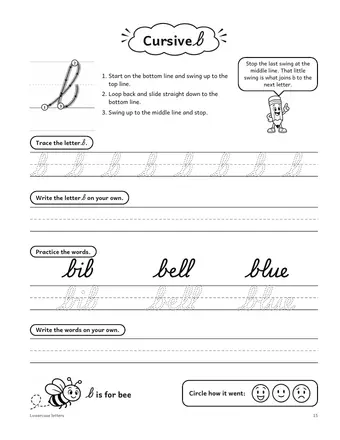
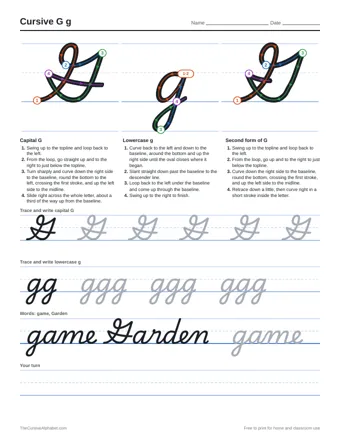
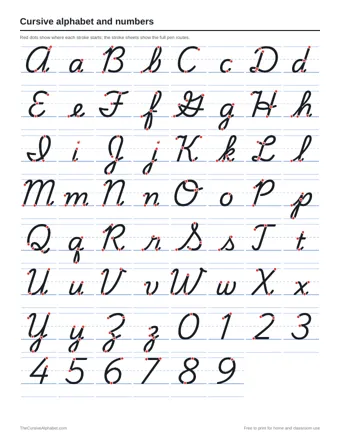
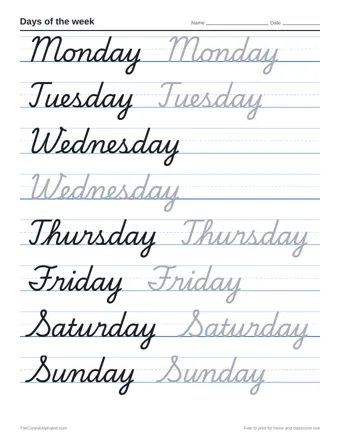
Every letter has a free practice sheet with the stroke guide, rows to trace and room to write. There are alphabet charts, word and sentence sheets, ruled paper, and a worksheet maker for your own words.
Name writer
Type a name and watch it written in joined cursive, with arrows for every stroke. Download it or print a tracing sheet.
Cursive generator
Real cursive handwriting you can download, and copy-and-paste cursive text for bios and messages.
Practice with stars
Trace letters, numbers and your name on a tablet, Chromebook or computer, and earn up to three stars each.
Worksheet maker
Make a tracing sheet from your own words, names or sentences, with starting dots and arrows, and print it.
Guides
All guides

Where to start
The site is written for adults: parents helping a child, teachers who need a chart or a sheet, and anyone relearning cursive after years of typing. The letters are a traditional American school cursive, the style most US schools that teach cursive use, and the one most adults learned.
Start with the lowercase
Most words are lowercase, and the lowercase letters share a few basic strokes. Learn l, i, t and u first, then a, d, g and q, which share an oval. The humps of n and m come next.
Learn the joins
Cursive is about the joins as much as the letters. Most letters leave from the baseline and swing up; o, v, w and b leave from the midline with a short bridge. The letter pages show both.
Capitals last
Capitals are used once per sentence and once per name. Learn the ones in your own name and the names you write most, then fill in the rest.